Creating A Charcuterie Board
What Charcuterie Is
Charcuterie is the art of arranging cured meats, cheeses, fruits, spreads, and accompaniments into a visually intentional board. It blends flavor, texture, and color to create a shared eating experience that feels warm, abundant, and inviting. Modern charcuterie goes beyond traditional meats and includes fresh produce, dips, sweets, and seasonal elements that make each board unique.
Categories and Varieties of Foods
A strong charcuterie board balances salty, sweet, creamy, crunchy, and fresh. Each category below includes the most common varieties people expect — plus a few elevated options.
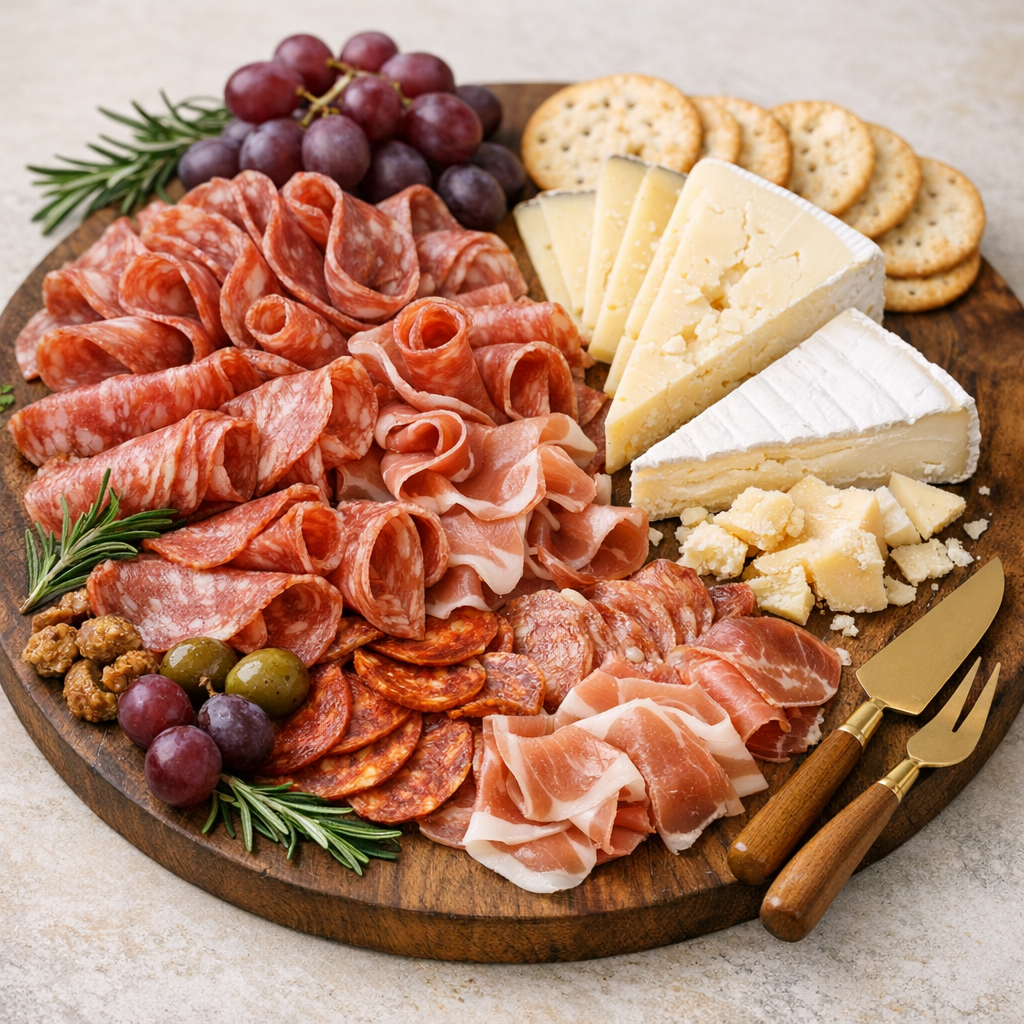
Meats
- Cured classics — prosciutto, salami, soppressata
- Smoky options — smoked sausage, speck
- Bold flavors — chorizo, peppered salami
- Thin‑sliced deli additions — turkey, ham (for lighter boards)
Cheeses
- Soft & creamy — brie, camembert, goat cheese
- Semi‑soft — havarti, gouda, fontina
- Firm — aged cheddar, manchego, parmesan
- Blue — gorgonzola, stilton (optional but adds contrast)
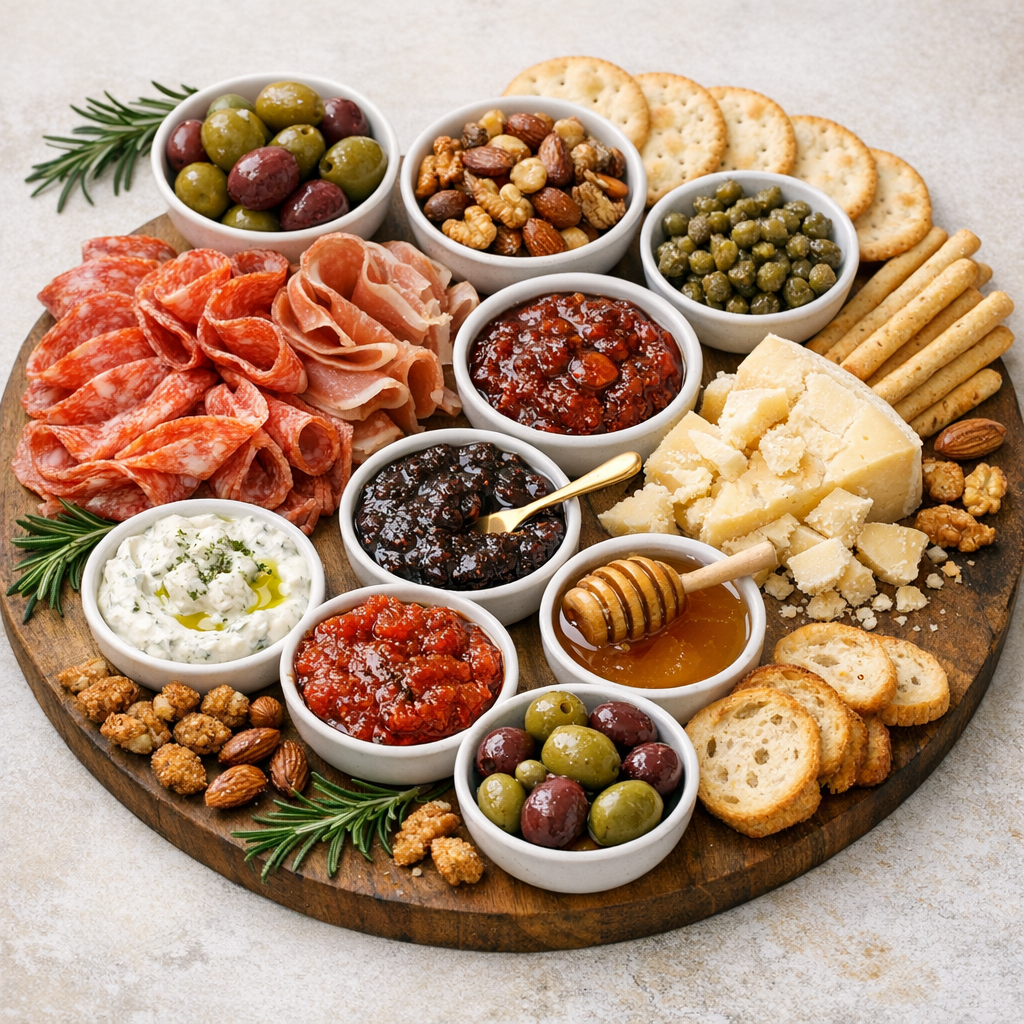
Sauces, Spreads & Dips
- Sweet — honey, fig jam, berry preserves
- Savory — whole‑grain mustard, olive tapenade
- Creamy — hummus, whipped ricotta, herbed cream cheese
- Specialty — hot honey, pesto, chutneys
Compliments & Extras
- Briny — olives, capers, cornichons
- Fresh — grapes, berries, sliced pears, figs
- Crunchy — nuts, crackers, crostini
- Sweet bites — dark chocolate, dried fruit, candied nuts
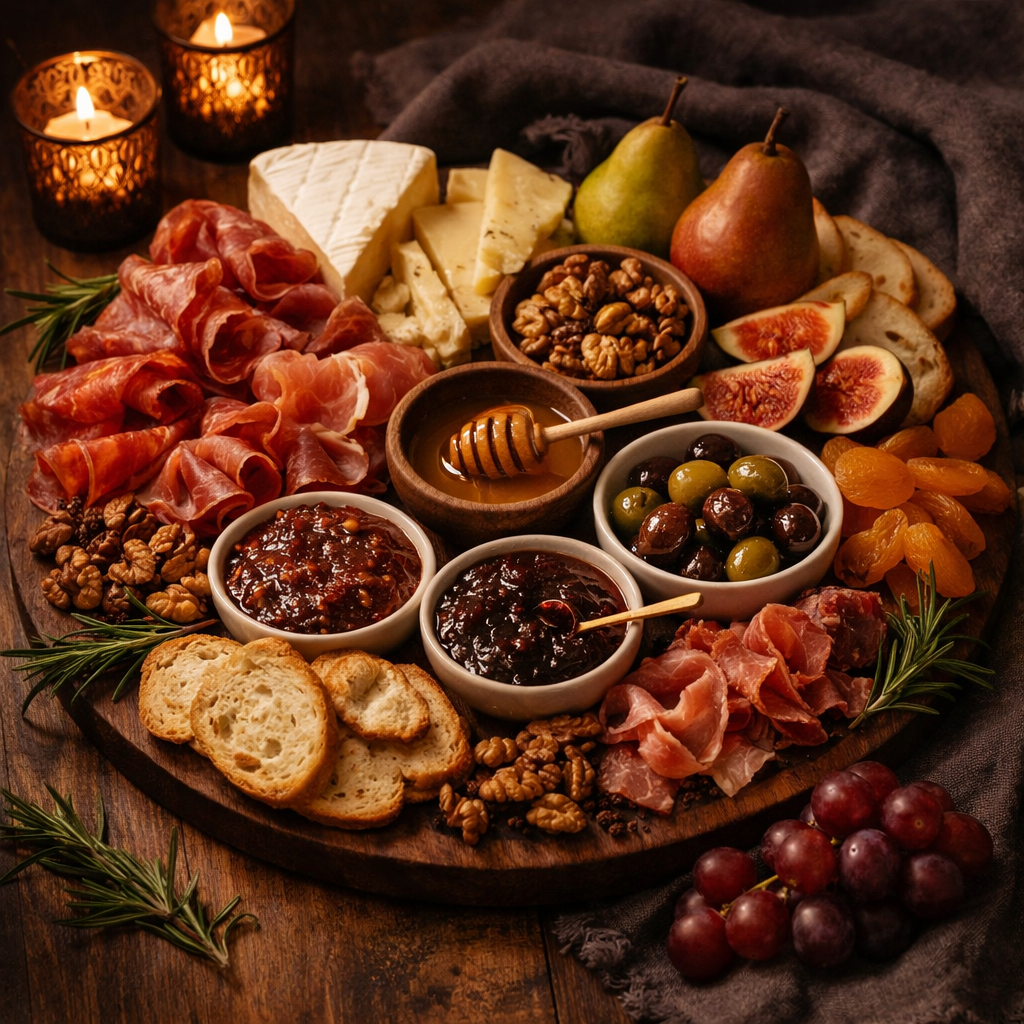
Seasonal Selections
Seasonality keeps your boards feeling intentional and elevated. Here’s how to shift ingredients throughout the year.
Spring
- Fresh berries, radishes, asparagus, herbed goat cheese
- Light meats like prosciutto and turkey
Summer
- Peaches, cherries, tomatoes, basil, burrata
- Bright jams and honeycomb
Fall
- Figs, pears, apples, spiced nuts, aged cheddar
- Rich spreads like fig jam or apple butter
Winter
- Citrus, pomegranate seeds, rosemary, brie
- Heartier meats and darker chocolates
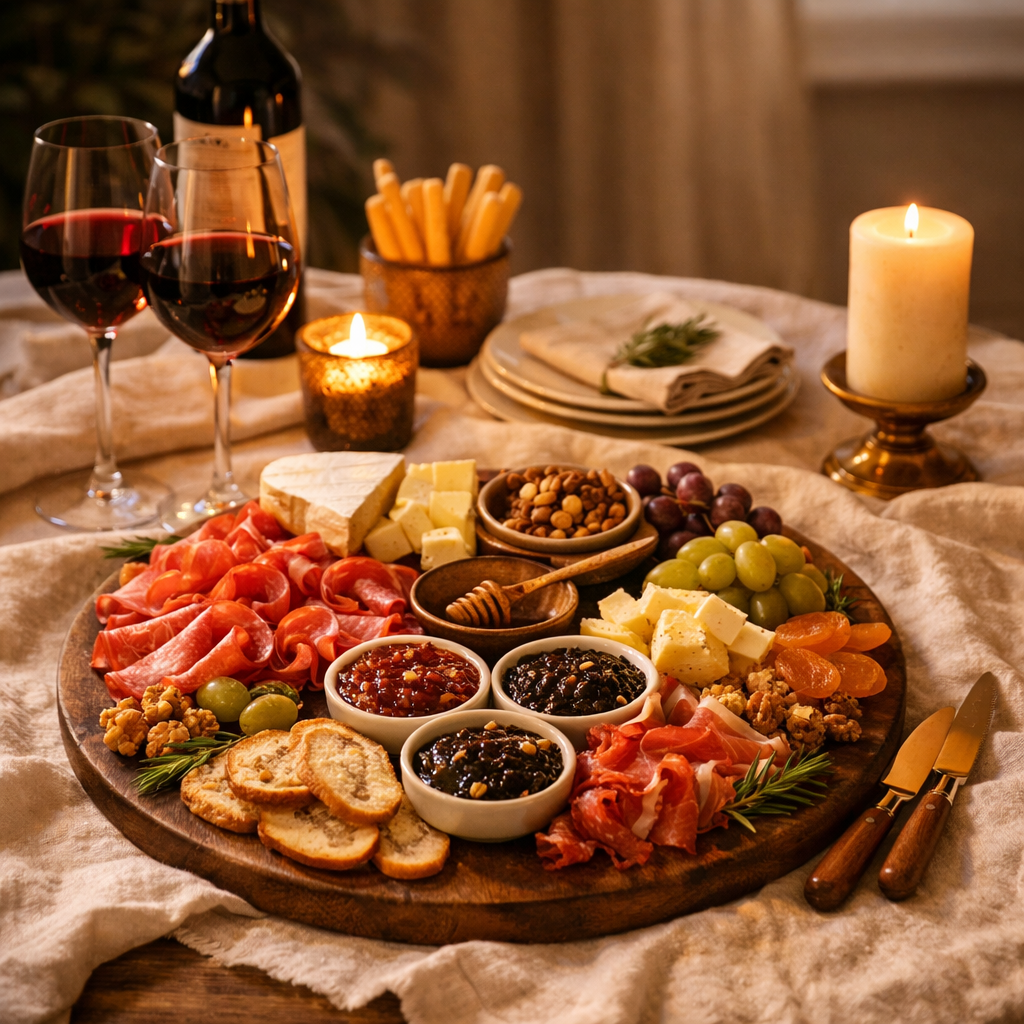
How to Stage a Charcuterie Board
Staging is where culinary vision is plated with an eye for style. A polished board follows a loose visual rhythm:
- Start with the anchors — place cheeses first to create structure.
- Add meats next — fold or ribbon them for height and texture.
- Fill with produce — grapes, berries, sliced fruit for color.
- Add spreads — small bowls for jams, mustards, and dips.
- Finish with details — nuts, herbs, chocolate, crackers.
- Balance the board — alternate colors and textures so no area feels heavy.
- Leave intentional negative space — An inviting and visually balanced look thrives on breathing room. The board should not look stuffed or crowded. Place foods from the list of Compliment and Extras, along with Sauces, Spreads and Dips to separate the selected items in the main categories, which are your meats and cheeses.